Performance Improvement
Getting to the root of issues to drive meaningful change
Highlights
Boost productivity and reduce waste
with AI-powered diagnostics and lean process expertise
Lasting improvements through root-cause resolution
not just symptom-fixing or quick wins
Steel Hub boosts productivity and reduces waste through targeted performance diagnostics and process optimisation. We combine AI-powered analytics, lean methods, and practical shop-floor experience to help teams increase throughput, improve yield, and resolve persistent quality issues.
Our approach goes beyond temporary fixes. Many improvement initiatives fail because they address symptoms rather than root causes. We help surface hidden inefficiencies – such as energy waste, product defects, and unoptimised flows – that create invisible losses and drag down plant performance.
Your Advantage
Increased throughput and yield with minimal downtime
Reduced cost per ton by lowering scrap, rework, and energy use
Practical solutions for persistent quality defects
Short payback periods for low-CAPEX energy and process improvements
How We Can Help
Performance Diagnostics
Identify where inefficiencies hide and quantify their impact on performance.
Production Process Optimisation
Streamline core processes to improve flow, consistency, and output.
Defect Troubleshooting & Solutions
Address recurring quality problems with hands-on, root-cause solutions.
Change Management for Operational Transformation
Guide your team through operational change with tools, coaching, and alignment.
Performance Improvement FAQs
How Steel Hub’s independent consulting improves steel plant performance
What types of operational problems does independant steel consulting solve?
We solve problems that reduce your output or increase your operating costs. The most common ones are:
- Yield loss: metal lost during the process, as well as material discarded as scrap, crop ends or rework.
- Downtime and unplanned stoppages: equipment failures, long delays between heats or coils, poor line availability.
- Throughput constraints: bottlenecks that set the pace of the whole plant.
- Quality defects: recurring or new defect types, off-grade product, or customer complaints.
- High consumption of energy and raw materials: electricity, electrodes, zinc, alloys and other inputs.
We cover the process from steelmaking through rolling to coating. If you know where the problem is, we focus there. If you want to find out where the biggest opportunities are, we recommend starting with a technical audit of your plant.
What results has Steel Hub achieved in past projects?
We have delivered measurable results across the steel production route, most of them with little or no capital investment. Selected examples:
- EAF long-products plant: +15% yield, +10% billets per hour and 5% lower electricity consumption over a three-year operational excellence programme, with total capex under USD 1M.
- EAF plant: €5/t lower melt-shop conversion cost within three months (€1–3M per year).
- Stainless steel EAF: oxygen injection cut from 14 to 3 Nm³/t and aluminium reducing agent eliminated, saving at least USD 10,000 per heat in recovered chromium.
- AOD converter, duplex stainless steel: 13% less MoO₃ (about USD 7,000 saved per heat) and sulphur reduced from 15 to 8 ppm.
- Galvanising line: unplanned stoppages cut by about 2.5 hours per day through zinc dross control, giving +7% throughput (35,000 t/yr) and an estimated USD 17M additional revenue per year, without major changes to existing equipment.
- Cold rolling mill: +30% productivity and USD 35M additional revenue per year after tackling strip breakages and stoppages.
We measure every result against a KPI baseline agreed with you at the start of the project.
How quickly can independant steel consulting provide results?
Often within weeks. During our first plant visit, our experts identify immediate improvements that usually cost almost nothing, and your teams can start implementing them as soon as we share our findings.
Improvements that need production trials or new operating procedures typically show results within a few months. At one EAF plant, for example, we reduced melt-shop conversion cost by €5/t within three months.
Programmes that change how the plant runs day to day, such as operator practices, maintenance routines and KPI reviews, build results over a longer period. At another EAF plant, a three-year operational excellence programme increased yield by 15%.
Can improvements to steel plants be made without major capital investment?
Yes. In most of our projects, the largest gains come from better process, operating and maintenance practices, which cost little or nothing.
We also identify small investments that unlock further improvements. Where a major investment is the right answer, we help you evaluate it. As a consulting firm independent of all equipment suppliers, we base our assessment only on what is best for your plant.
How do you improve yield without compromising quality?
We measure yield in good tonnes, not total tonnes. A gain that creates defects or off-grade material shows up in our KPIs as a loss, so quality is part of the yield target from the start.
Before any change, we assess its risks and agree on guardrails, such as limits on chemistry, temperatures or defect rates, to protect quality, safety, the environment and production. Changes are then tested in controlled production trials, with dashboards tracking yield and quality together across the whole process, not just the step we are changing. If a quality KPI moves outside its limits, we adjust before going further.
In practice, yield and quality usually improve together. At one stainless steel plant, reducing surface defects on cast slabs cut grinding losses to below 5%, improving slab quality and yield at the same time.
How do you diagnose the root cause of recurring production and quality problems?
We work from data first, then verify on the shop floor, in four steps:
- Understand: we review your process, product mix and operating data with your teams and agree on KPIs.
- Establish a baseline: we calculate the KPIs from your data and compare them with industry benchmarks to see how far your plant is from where it should be.
- Find the cause: we look across the whole process, because the cause of a defect is often not where it appears. It may be in equipment, process settings, raw materials or operator practice, and often a combination. We observe shifts and talk to operators, and form hypotheses using tools such as fishbone diagrams, Pareto analysis and 5 Whys. We then test each hypothesis against the data and discard those that are not supported.
- Verify: where the data is not conclusive, we run production trials planned with design of experiments (DoE), to test hypotheses and find the best combination of process variables.
You receive the root causes, confirmed by data, and a quantified, prioritised action plan.
Do you provide process audits and benchmarking against industry best practice?
Yes, through our technical audit. We recommend it when you want to improve performance but are not sure where to start, or when a problem has many possible causes.
A team of experts reviews your operating data and benchmarks your KPIs against industry best practice. They then visit your plant to assess equipment, process practices and operations alongside your teams. In past projects, for example, we have benchmarked EAF productivity against European plants and pickling bath composition against best practices.
You receive a roadmap of improvement opportunities, each valued in tonnes and euros and ranked by impact and effort. Clients then usually continue with us to implement the highest-priority ones.
Will your work disrupt our production?
We plan our work so that your production keeps running with minimal disruption. During a technical audit, we observe and work alongside your teams under normal operating conditions. When we run trials, we plan each one with your team around your production schedule and agree in advance what will be tested, when, and how risks to production and quality will be controlled.
During each trial, we analyse the data as it comes in, so we can decide on next steps quickly and stop or adjust if needed.
We see this as teamwork. Your teams know your plant better than anyone, and the best results come when their knowledge and our experience work together.
What do you need from our team and our data?
From your team, mainly openness and time. We work alongside your people, and a fresh pair of eyes can sometimes notice what is harder to see from inside the daily operation. Your teams’ knowledge of the plant is just as essential to finding the right solutions. We ask for a nominated contact on your side, matched by one on ours, so questions are resolved quickly, and access to people at all levels, from operators to management.
From your data, we ask only for what is relevant to the problem, such as production, delay, quality, energy and maintenance records. We use it to build KPIs and dashboards that show how your process is running and later track the improvements.
Complete data and open cooperation are the two things that most affect how quickly we deliver results, and how good they are.
How do you use data and digital tools in your projects?
Once we receive your data, we build a data pipeline that cleans and structures it into a single, reliable database. From it, we create dashboards showing your most important KPIs and how they have developed over recent months, so we can see their levels, trends and where behaviour differs, for example between shifts or products.
These dashboards help us understand your process and operation and later let us track the effect of each change during implementation.
When needed, we also use statistical models and machine learning to find correlations between process variables. This helps us diagnose problems and design better trials.
How do you ensure improvements are sustained after the project ends?
We build the system that keeps them in place before we leave. Together with your teams, we set up a performance management system: KPIs tracked at every level of the organisation, from the shop floor to management, each with a clear owner, a target and a regular review. When a KPI drifts, the routine to detect it, analyse the cause and act on it stays within your company.
We support your teams as procedures change, update the standard operating procedures with them, and train people at every level, from operators to managers, so the new practices become the normal way of working.
After the project, we can continue to monitor your process data remotely and flag deviations early, before they turn into losses.
Which areas of the steel plant do you cover?
We cover the full production route, from steelmaking to the finished, coated product, as well as the systems that support every area of the plant:
- Steelmaking: scrap yard, electric arc furnace (EAF), basic oxygen furnace (BOF), secondary metallurgy (ladle furnace, VD and RH vacuum degassers, AOD converter) and continuous casting
- Rolling and processing: hot rolling, cold rolling, pickling, annealing, galvanising, finishing, and pipe and tube production
- Plant-wide: maintenance and equipment reliability, automation, energy management, and dedusting
For each project, we put together a team of experts who have spent their careers in the areas involved. We have delivered projects on both carbon and stainless steels, for long and flat products.
Our Client Results

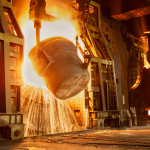
Operational excellence program at an Eastern European steel plant: Increasing yield by 15% with less than 1 million USD of capital expenditure
Key Takeaways Here are five key takeaways from this document: Problem: An Eastern European steel plant was underperforming, with low
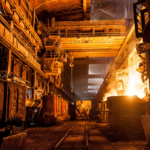
Optimising AOD Chemical Composition of Duplex Stainless Steel
Key Takeaways Problem: A stainless steel producer in Southeast Asia faced quality issues due to non-optimised chemical compositions, leading to
Optimising EAF Chromium oxide recovery and Oxygen Consumption for Duplex and Ferritic Stainless Steels
Key Takeaways Here are five key takeaways from this document: Problem: A client in Asia faced high oxygen and aluminium
Reducing Longitudinal Depression and Hot Cracking in Duplex Stainless Steel Slabs
Key Takeaways Problem: A stainless steel producer in Asia faced defects in duplex stainless steel slabs due to improper casting
Explore our latest insights

Protected: Yield-Led Cost Optimization in EAF Steelmaking
There is no excerpt because this is a protected post.
How to Run an Effective Due Diligence on a Steel Plant
How to Run an Effective Due Diligence on a Steel Plant If you are considering acquiring a steel plant, you
Steel Hub at UK Metals Expo 2025: From Policy Signals to Plant Results
Turning Policy into Practice: EAF Transition and steel Industrial Competitiveness at UK Metals Expo 2025 The 2025 edition of UK Metals Expo

Riding the Decarbonisation Wave in the UK Steel Industry
Snapshot of the current state of the UK steel industry The UK steel industry is facing unprecedented challenges, including intense
What our clients say


Enquire with us
Request a consultation with one of our skilled consultants, and let’s embark on a journey to unlock your full potential.